AI Is Forcing Engineering to Grow Up and Honestly, It’s About Time

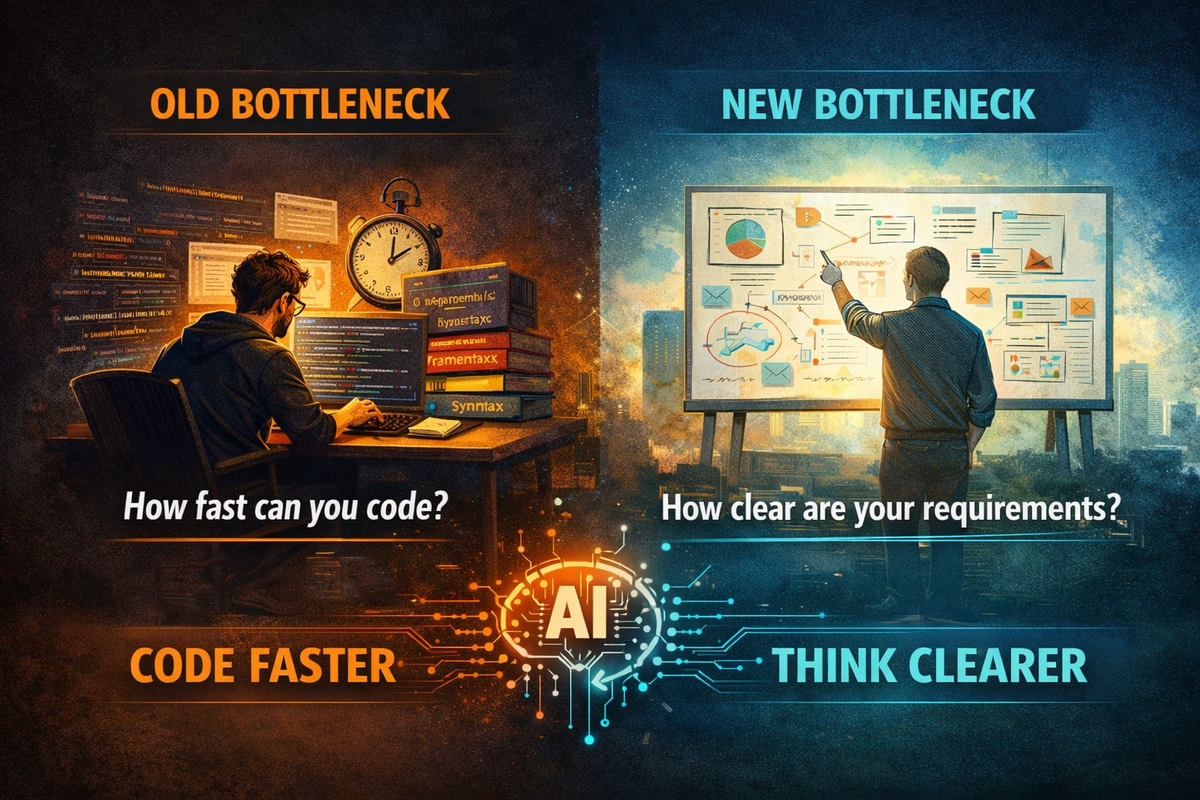
AI isn’t transforming engineering because it writes code.
It’s transforming engineering because it exposes unclear thinking instantly.
I’ve been using tools like Claude Code across real projects lately. Not demos. Real debugging, refactoring, architecture reviews, and service scaffolding. The output can be wild. The kind of wild where you pause and go, “That would’ve taken me half a day.”
But there’s a catch.
The quality of the result depends almost entirely on how clear the requirements are.
And that’s the real shift happening right now.
The Bottleneck Moved
For years, the main question in software was “How long will it take to build?”
AI is making that question less important.
Execution is getting faster. Sometimes dramatically faster.
The new bottleneck is clarity.
If you don’t clearly understand the problem, constraints, users, and success criteria, AI will happily help you build the wrong thing at record speed.
Which is impressive. Just not useful.
AI Doesn’t Fix Bad Requirements
It scales them.
Give it vague direction and it produces polished nonsense.
Give it structured, well-thought-out intent and it produces results that are shockingly close to done.
The difference isn’t the tool. It’s the thinking.
Value Is Moving Upstream
The engineers creating the most impact right now aren’t the fastest coders.
They’re the ones who can:
- extract real requirements
- clarify ambiguity
- define constraints
- surface edge cases early
- translate business goals into precise technical direction
Once that part is solid, implementation becomes the easy part.
What This Means Going Forward
AI didn’t remove the need for strong engineering fundamentals.
It made them more important.
Because now execution is cheap. Direction is expensive.
The teams that win in this next phase won’t just be the ones using AI.
They’ll be the ones who know exactly what to tell it to do.